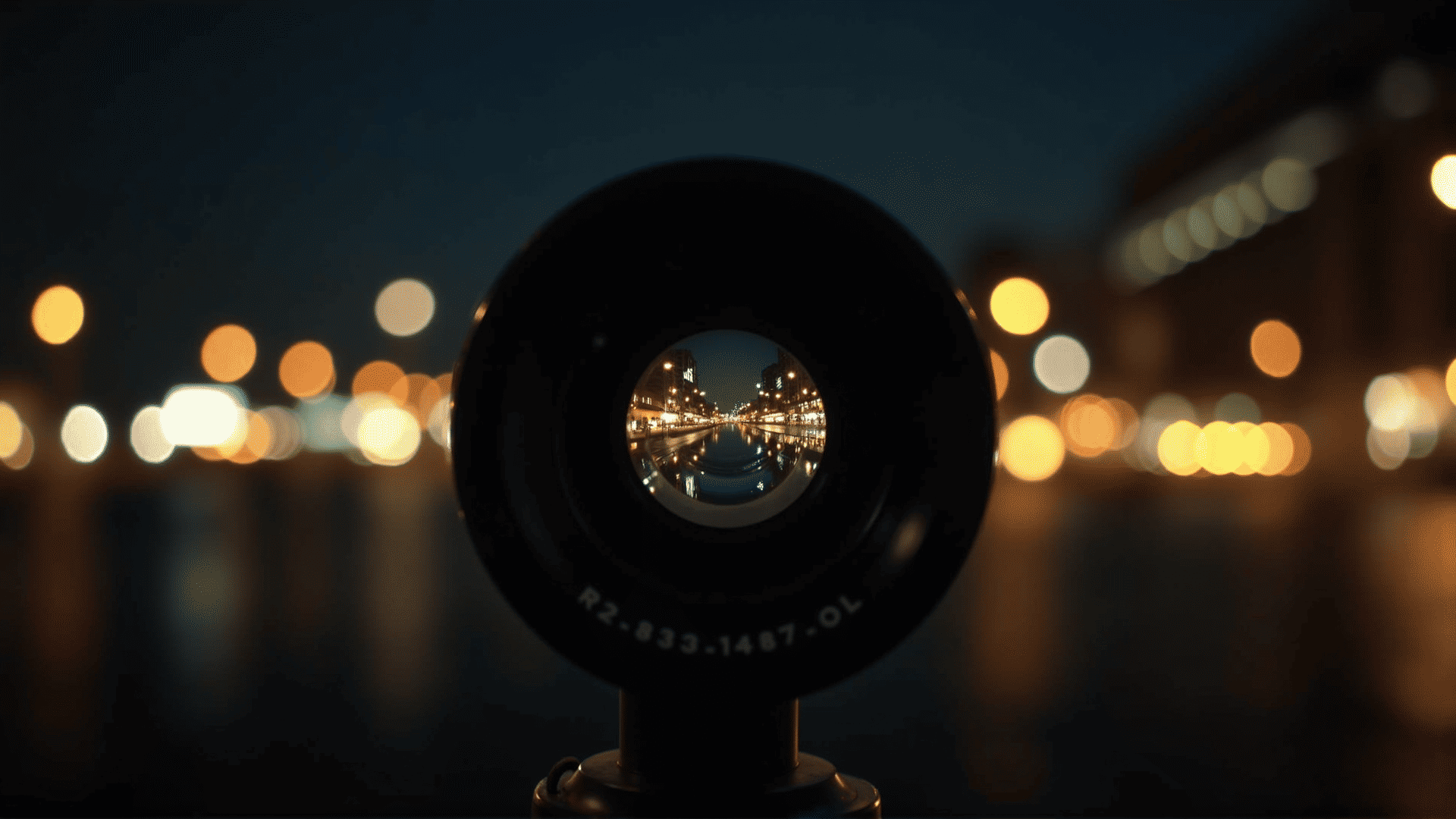
Understanding the interplay of aperture and shutter speed is crucial for creating captivating photos, be it portraits with dreamy backgrounds or action shots that freeze a moment in time. Mastering these two foundational elements of photography opens the door to greater creative expression and technical excellence.
Aperture: Shaping Depth
Aperture refers to the opening in a camera lens through which light enters. This is often represented by f-stop numbers such as f/2.8, f/4, or f/16. A lower f-stop (like f/2.8) results in a wider aperture, allowing more light to flow in, and creates a shallow depth of field. This results in photographs where the subject is in sharp focus against a beautifully blurred background, making it ideal for isolating your subject in portraits.
Conversely, a higher f-stop (such as f/16) results in a narrower aperture, letting less light through and increasing the depth of field. This is ideal for landscapes where capturing both the foreground and background in sharp detail is desired.
Shutter Speed: Controlling Motion
Shutter speed determines how long the camera's shutter remains open to let in light. This is typically measured in fractions of a second like 1/500, 1/100, or in full seconds. Fast shutter speeds (like 1/1000) freeze motion, perfect for capturing sharp images of fast-moving subjects such as athletes or wildlife.
On the other hand, slow shutter speeds (such as 1/2 or 1 second) allow the creation of motion blur. This technique can convey movement and emotion, ideal for capturing running water in a river or the vibrant trails of city lights at night.
Balancing Act
The art of photography often involves balancing aperture and shutter speed with ISO settings to achieve the right exposure. When you widen the aperture to let in more light, you might need to quicken the shutter speed to avoid overexposure. Similarly, if you slow down the shutter speed to convey motion, narrowing the aperture can prevent the image from becoming too bright.
Experimentation is key to finding the right balance that fits your creative vision. Practicing with different settings will also enhance your technical skills, helping you intuitively adjust the camera settings as needed for various lighting situations.
Creative Compositions
Incorporating these elements into your compositions can dramatically alter the feel and impact of your photographs. For instance, using a large aperture to focus on a person with a stunning landscape softly out of focus can provide an immersive feel. Conversely, capturing bustling city life with a slow shutter speed can enrich your image with dynamic storytelling.
By mastering aperture and shutter speed, you are not merely clicking photos but crafting narratives through images. Your camera becomes an extension of your vision, translating the world as you see it into art. Through practice and experimentation, your photography will evolve, enabling you to capture moments that resonate emotionally and visually.